

Craft In China
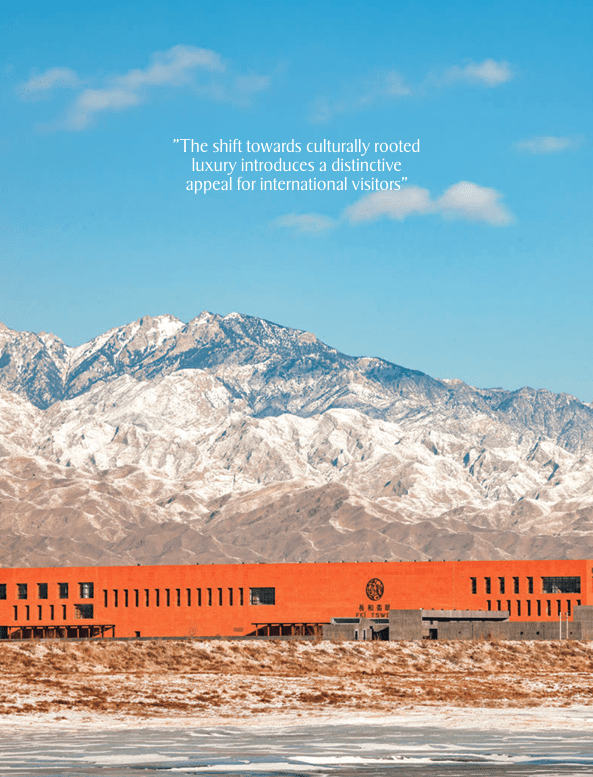
A similar narrative is unfolding in China’s wine industry, with independent producers such as Fei Tswei Winery in Ningxia – around a 90-minute flight or seven-hour drive from Xi’an – beginning to shape a new chapter in global taste.
Owner Lily Zhang sees this as an advantage: “We don't have the burden of history, which allows us more room to experiment with grape varieties, winemaking methods and product styles.”
Many Chinese winery owners are not from winemaking dynasties – they are passionate enthusiasts, willing to boldly experiment with everything from vineyard cultivation to winemaking practices, adds Lily.
Combined with advanced equipment, rapid progress in farming and blending techniques, as well as strong capital support, these wineries are well-equipped to manage the entire process, from their own vineyards to final production.
Moreover, the scale of the Chinese market allows wineries the flexibility to refine their styles and ultimately solidify them. The results are beginning to register internationally. At the Decanter World Wine Awards 2025, two Chinese wines claimed Best in Show for the first time, while the renowned Wynn Signature Chinese Wine Awards has helped bring growing global attention to the country's emerging regions.
In Yunnan, Ao Yun – owned by French luxury conglomerate LVMH – offers a different expression of Chinese craftsmanship. Born from a four-year search for the ideal terroir to produce a Bordeaux-style wine, the label is shaped by high-altitude vineyards at the foothills of the Himalayas, where tiny plots farmed by local families yield wines of striking freshness. Elsewhere, distinct regional identities are beginning to emerge. Silver Heights in Ningxia is known for its restrained elegance, while Long Dai – backed by Domaines Barons de Rothschild – brings Bordeaux winemaking expertise to Shandong.
Meanwhile, Changyu reflects the scale and ambition of China’s broader wine industry. As the industry evolves, so too does the way it is experienced. Wine travel in China is still in its infancy, but gaining traction through curated, place-driven journeys, rather than the traditional model of cellar doors and tasting rooms.
A typical itinerary might include meeting winemakers in Ningxia, staying in scenic lodges, and pairing wines with regional cuisine, or combining tastings with treks through Yunnan and visits to contemporary art hubs. The appetite is strongest among well-travelled collectors who feel they have seen it all.
“For them, China offers discovery, and discovery is the ultimate luxury,” says Louen Tang, managing director of Charlotte Travel and a wine expert.
“Ten years ago, Chinese wine was often positioned defensively. Today, among informed drinkers, collectors and sommeliers, the discussion is increasingly about site, restraint, vintage variation and producer intent,” he adds.
Louen notes that younger Chinese consumers, particularly those who have studied or lived abroad, are “far more interested in authenticity than labels that shout lineage”.
Looking ahead, Louen expects Chinese wine to become a selective but established presence on international lists, with top producers appearing alongside established names in Michelinstarred restaurants and private cellars. He adds: “The conversation will move away from nationality towards producer and place, which is where fine wine belongs.”
Source: Toh, Ee Ming. Year. “Craft in China" SilverKris, July-August, 2026.


.jpg)